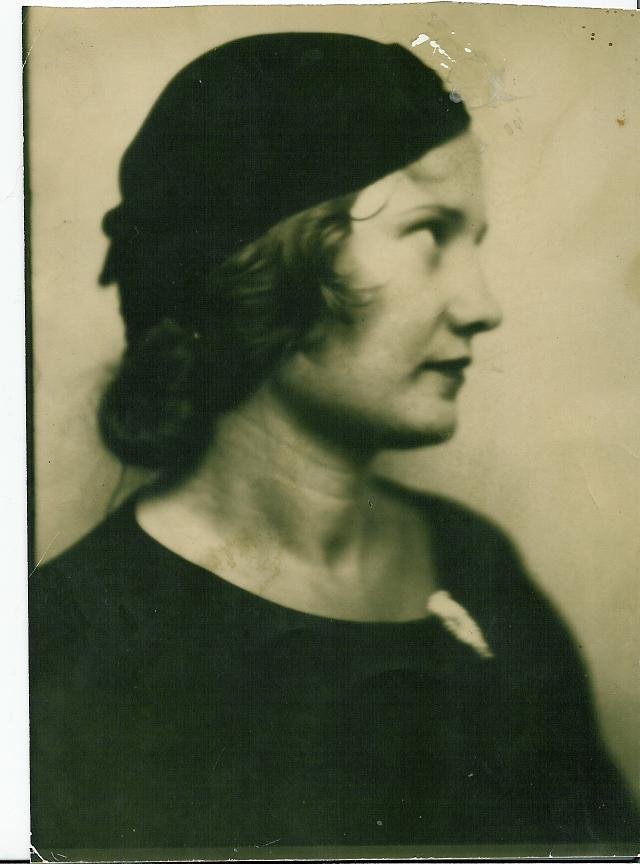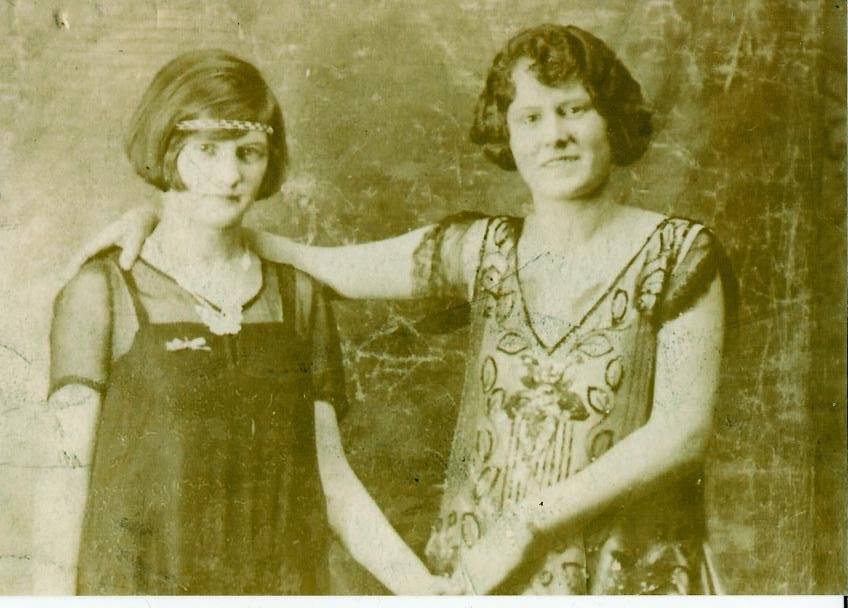
I was born in Yvonekowitz? Austria on March 8, 1906. My father’s name was Jacob Seidman and he was born in Stafchan, Austria. My mother’s name was Gittel Weiselberger and she too was born in Austria. My husband was also born in Stafchan.
My childhood and hometown
My father had a small store, a general store. But then my father was in America except for the one year he was home on a visit and he came to take us back with him. Grandma didn’t do any business. He sent us support from America from his employment..
Memories I have of my hometown and of some of my childhood are unclear to me. I vaguely remember my childhood, so I will start with the time that my father, who was in America came home for a visit to our hometown and spent probably just one year. (probably around 1913/1914). War broke out (or was imminent) and he wanted to take us back with him. But my mother didn’t want to leave that suddenly. My father wanted to avoid being enlisted in the Austrian army and he was in a hurry to get back to America and mother was not ready for that trip. We had a home and a lovely garden to sell and my mother felt she needed time to plan and do this thing properly. Grandma had no idea that a war would last. She assumed it would not last long.
MS note: I also remember my mother telling me that my grandma was not keen on going to America because she felt it was a trief country and she also cared for a blind brother and was concerned about how he would fare if she left.
Another thing I remember that was of importance was our capturing by the Russians. One thing that stands out very vividly in my mind is how all the Jewish families, in most cases it was mothers and children and grandparents gathered with a leading Jewish figure in that town. And they were sitting and praying to God to be saved, not to be taken either to the battlefield or to Siberia, as the Russian Cosacks warned them they would be taken. One elderly very pious woman was in constant prayer with the rest of the Jewish people from the community. Some of them that did not wear wigs had their hair cut in expiation for their sins, of which there were few I am sure.
Our captivity as refugees
Cosacks on horses were driving us from town to town and we were only able to take practically what was on our bodies, and a few things in a bag. It was during the summer months and I remember having worn sandals. And from walking so much the soles of my sandals tore and my feet were bleeding from the stones and rough roads.
When we got to a city (Snotien?) which was a few miles from our hometown, we stopped there to rest and get shelter for the night. There were many abandoned houses, abandoned by Jewish families and they let us get into those buildings and sleep over night. I also recall that we children wandered through the empty buildings looking for adventure. I found an umbrella to play with. I was still of a playing age. Some food was found, and we were playing like children do under any circumstances.
Then the following morning we were given some food, bread in most cases, some fruit and then we were driven from town to town throughout the day. At nightfall we stopped again for a night’s rest. That lasted about 24 hours until we passed a city, Zelitschick and there were signs of a battlefront there, and smothering mountains. The Cosacks were telling the older people that some have lost brothers and relatives and friends in that battle and that we the Jews have to pay the penalty for their deaths.
We wandered for two more days until we got to a city by the name of Chortkof. That city was known for its prominent rabbi, who had left the city and fled with his family to Vienna. Most people naturally didn’t have the means to flee for their safety, but the rabbi I guess did. There were already refugees in that city preceding our arrival and is was very difficult to get shelter for us.
But let me tell you how we remained in that city. We were not taken any further. There were some wealthy prominent Jews in that city who paid a ransom to the Cosacks or the general in charge for us to remain in that city. So a handsome sum of money was paid for our ransom.
The local Jews put us up in the rabbi’s palatial home. There was a new synagogue and we slept in those buildings on straw. Some had blankets. Whatever they had they spread out on the floor and we slept there. We stayed there until some family took us in and gave us shelter. Some local Jews were very philanthropic, very helpful in getting shelter for us in homes.
After a few weeks a very pious woman took us into her home. They were a family of four and they had only two bedrooms. We were given sleeping space on the floor in her home. They also gave us some food until a public kitchen was set up by the Jewish community.
(MS notes) At some point during this period we were taken in by a family that had a bakery. My mother did housework for the family and also helped them in the bakery. I remember that I would go with my mother to the train station to sell bread and hot rolls to the soldiers on the troop trains that passed through our city. (MS: I remember when I was in Greece in 1960 and saw people selling bread and rolls to passengers on the train in which we were riding that I was reminded of my mother’s account included here.)
We managed to survive during the war years from the money that my mother earned. She was a good housekeeper, good cook and baker. She baked cakes and bread and sold it. That was her occupation and that was how we managed to survive, to eat, pay rent and survive.
As refugees and because of the war we had no contact with my father. So we no longer received the money that he had sent us for support.
Arriving in America
I was 14 years old when we came to came to America. We came on the Aquitania third class. I guess grandpa couldn’t afford to send us more money so we could travel first or second class. In third class there weren’t any dances or activities. Besides I wasn’t of an age to participate in such activities.